
Hot Water Heater Repair Cost in 2026: Prices by Part and Symptom
The average repair bill lands near $600, but yours depends on which part failed and how hard it is to reach. The cost of hot water heater repair in 2026 runs $228 to $1,017 for most jobs, with the full observed range stretching from $90 to $1,775 and up (Angi and HomeGuide national data, checked August 2026). Averages do not pay invoices, so match the symptom to the price before anyone quotes you; the part-by-part table does most of that work.
The 2026 cost to repair a hot water heater, part by part
Ranges below are Embercrest's compilation of 2026 national repair data from Angi and HomeGuide. Figures include labor unless noted.
| Repair | 2026 range | Typical failure signal |
|---|---|---|
| Heating element | $100-$350 | Electric tank: lukewarm water or none at all |
| Thermostat | $100-$350 | Water too hot, too cold, or swinging between |
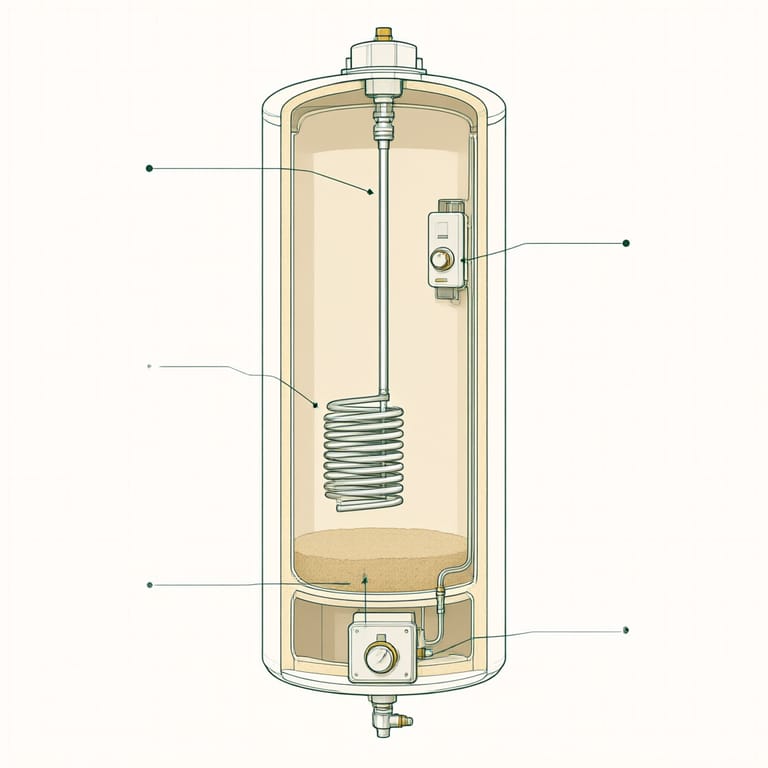
| Anode rod (pro replacement) | $150-$350 | Rotten-egg smell, rusty water; part alone $20-$50 |
| Thermocouple (part) | $20-$30 | Gas tank: pilot light will not stay lit |
| Flush and small fixes | $100-$350 | Popping, rumbling, slow recovery |
| Gas control valve, complex leaks | $200-$750 | Burner misbehavior, leaks at fittings |
| All repairs, typical band | $228-$1,017 | Average about $600 |
If the symptom cannot wait for the rest of this page, call (800) 555-0184. Embercrest routes the call, free, to a licensed repair pro near you; the price is settled between you and that pro.
Safety lines that do not move for any price
Three rules sit above every dollar figure on this page:
- Gas smell means leave. A rotten-egg odor around the heater is a gas warning: get everyone out first, and only from outdoors dial 911, then the gas utility's emergency line. While still inside, touch no light switch, light nothing, keep the phone pocketed, and do not go hunting for the source. Repairs wait; safety does not.
- Never cap a dripping TPR valve. The temperature-and-pressure relief valve drips because something (thermal expansion or overpressure) is pushing it open. Plugging the discharge has caused water heater explosions, which is why the ICC water heater safety guidance treats an open, unobstructed discharge pipe as non-negotiable. A persistent drip is a diagnostic gift: something upstream needs fixing.
- 240 volts is not a guess. If you cannot verify with a meter that an electric tank's circuit is dead, you have found the boundary of DIY.
Which part failed? Match the symptom to the bill
Work down this tree first:
- No hot water, electric tank. Prime suspects are a tripped breaker (free), then an element or thermostat, the $100-$350 tier. Our element cost guide covers the job.
- No hot water, gas tank. If the pilot will not stay lit, the thermocouple is the classic culprit, one of the cheapest parts in plumbing at $20-$30, though you are paying mostly labor and diagnosis. If the pilot is fine but the burner will not fire, you are in gas control valve territory: $200-$750.
- Water runs out fast or arrives lukewarm. On electric units, often a failed lower element. On any tank, heavy sediment produces the same complaint; a flush in the $100-$350 small-fix tier is the first move.
- Popping, rumbling, kettle noises. Sediment boiling water under a mineral blanket. Flush-tier pricing if caught early.
- Rusty water or a sulfur smell. The anode rod has been consumed. Replacing it is a $150-$350 job that is genuinely preventive; see the anode rod cost guide.
- Water on the floor. Location decides everything. A weeping fitting or TPR valve is repairable. Wetness from the tank shell itself has no fix at any price; that means a new tank.
The repair hub links to deep guides on each of these failures.
Why two repair quotes for the same symptom differ
Most of the gap between one quote and the next traces back to six things:
- Which tier the part sits in. Elements, thermostats, thermocouples and anode rods live in the cheap tiers; a gas control valve or a leak chase at the fittings lives in the $200-$750 tier.
- Access. A tank in an open basement is a quick job. The same tank in an attic, a crawl space, or a closet with the element facing the wall adds labor before a part is touched.
- Sediment and age. A lower element buried in scale turns a short swap into an excavation, and corroded fittings on an old tank snap instead of turning. Pros price that risk in.
- Fuel type. Gas work (thermocouple, gas valve, burner) is licensed-pro territory, so the labor share of a gas repair runs higher than the electric equivalent even when the part is cheaper.
- Warranty status. A covered part turns a parts-and-labor bill into labor only. Check the rating plate serial number before the visit.
- Timing. An after-hours emergency call prices above the identical weekday job. If the failure is inconvenient rather than urgent (lukewarm water, noise, a slow drip into a pan), a regular slot keeps you out of emergency pricing.
Line items the part-by-part table leaves out
Real repair quotes often carry items that no per-part range includes:
- Diagnostic or trip charge. Many repair pros roll it into the final bill if you approve the work and charge it standalone if you do not. Confirm on the phone.
- Permits. A like-for-like part swap rarely needs one, but work on the gas train, venting, or the relief-valve discharge can trigger a permit in some jurisdictions; the water heater permits guide covers when one applies. The fee and the inspection are separate lines.
- Code catch-ups found during the repair. A missing expansion tank on a closed system, a relief-valve discharge pipe that does not meet the ICC rules above (full valve-outlet diameter, air gap, terminating where it can be seen), no drain pan under a tank above living space, or missing seismic strapping where your state requires it. Each is a legitimate add-on and deserves its own line you can question.
- The next failure. Sediment found during an element job means a flush is due; a consumed anode means the rod is due. Bundling them on one visit beats a second truck roll.
Your local quote will sit above or below the national range for ordinary reasons: metro labor rates, whether gas work in your state belongs to a separately licensed trade, how hard your water is (sediment is a labor multiplier), and how many local pros work nights and weekends.
Ready to talk to a licensed water heater pro?
Call (800) 555-0184Free call. A licensed local water heater installer picks up.Licensed water heater partners in your area- Licensed and insured partner network
- 24/7 call routing
- Free call, no obligation
- You approve the price with the installer directly
What the diagnostic visit actually buys
A visit done right includes testing rather than guessing: multimeter checks on elements and thermostats, a look at the burner and pilot assembly on gas units, a TPR valve function check, and a verdict on sediment. If the quote arrives without anyone touching a tester, you are buying a parts lottery ticket, not a diagnosis.
Tankless water heater heat exchanger replacement cost
Tankless units break differently. Sensors, flush-fixable scale buildup, and igniter issues sit at the routine end; the heat exchanger is the expensive organ. National per-part data (Angi and HomeGuide) does not publish a clean heat-exchanger line, but exchanger jobs are the ones where quotes climb toward the $1,017 top of the typical band and past it toward the $1,775-and-up end of the observed range. Check two things before approving one: the exchanger warranty (some manufacturers warrant the exchanger separately and longer than the rest of the unit, so read your model's terms) and the comparison against a full replacement, since typical tankless projects run $1,400-$3,900 installed per Angi's 2026 data. An out-of-warranty exchanger on an old unit often loses that comparison; a young unit is a different story, because DOE Energy Saver puts tankless life expectancy near 20 years. Our tankless repair page covers the diagnosis.
Running the 50% rule on a repair quote
The standard industry test: when the cost of hot water heater repair passes half the cost of replacement, stop repairing. With a typical tank replacement averaging about $1,346 installed (Angi, 2026), the math draws a bright line near $675, squarely inside the gas-valve and complex-leak tier. Age sharpens the rule. Storage tanks are planned around an 8-12 year life (the industry figure Angi uses); a $500 repair on a 10-year-old tank buys you a repaired part bolted to a tank that is still 10 years old everywhere else. The same $500 on a 4-year-old unit is money well spent.
Three patterns override the math in favor of replacement: a second repair inside a year (failures cluster as tanks age), rust streaks running down the tank jacket (the shell is corroding from inside), and any tank that has already leaked from the body. The reverse mistake is real too: replacing an 8-year-old tank over a thermocouple (a $20-$30 part) wastes most of a $1,346 install. Age plus symptom plus quote, all three together, make the call.
One date belongs in the math for electric tanks. From May 6, 2029 onward, the efficiency standard finalized by the US Department of Energy requires new electric storage models above 35 gallons to be heat pump designs (DOE). A repair that carries a 40- or 50-gallon electric tank past 2029 means its eventual replacement will likely be a heat pump unit, which costs more upfront and much less to run. Our repair vs replace guide walks the full decision, including cases where a cheap fix is still the wrong call.
DIY repairs vs calling a pro: where the line sits
Some of the table's cheapest jobs are honest DIY candidates; the rest only look that way.
- Flush: DIY. A hose, a bucket, and the flush walkthrough keep the sediment tier off your bill.
- Anode rod: DIY for the well-equipped. It needs a breaker bar, overhead clearance, and the nerve to break a factory-torqued fitting; many homeowners hand it off at the $150-$350 pro price.
- Elements and thermostats: pro unless you own and trust a meter. The work is 240 volts at the terminals. If verifying a dead circuit is not second nature, it is not your job.
- Thermocouple, gas valve, burner: licensed pro. Anything in the gas train is licensed-pro work; the part may cost $20, the consequence of a bad seal does not.
- TPR valve: pro. It keeps the tank from becoming a projectile. Have it tested and replaced by someone who will size the discharge pipe correctly; see TPR valve replacement.
Call right away, not after a weekend of testing, when: water is coming from the tank body or a seam; the breaker trips again after a reset; the burner shows soot or scorching, or a carbon monoxide alarm sounds (incomplete combustion or a venting fault, which is why venting work is licensed-pro only); the TPR valve discharges steam or hot water continuously; or tap water arrives scalding hot (the CPSC recommends a 120F thermostat setting, and 140F water can cause a third-degree burn in about six seconds).
One nuance on that 120F figure: OSHA's Legionella guidance notes that 120F storage does not kill the bacteria and calls for storing hot water at 140F; the usual answer is a thermostatic mixing valve that tempers the water at the fixtures. If anyone in the home is immunocompromised, ask the pro about a mixing valve instead of simply turning the dial down.
Keeping the next bill in the small tier
The two maintenance items with actual price tags: a flush in the $100-$350 small-fix tier roughly annually in hard-water areas, and an anode rod at $150-$350 every 3-5 years. Both exist to keep you out of the $200-$750 tier and away from early replacement. Water heating runs about 18% of home energy use per the US Energy Information Administration, so a sediment-choked tank also quietly taxes every utility bill between failures.
For a diagnosis instead of a guess, call (800) 555-0184. The call reaches a licensed, insured pro near you through Embercrest's partner network, and the quote covers the part that actually failed, not the average cost of hot water heater repair. Browse the full cost hub for every price on the site.
Ready to talk to a licensed water heater pro?
Call (800) 555-0184Free call. A licensed local water heater installer picks up.Licensed water heater partners in your area- Licensed and insured partner network
- 24/7 call routing
- Free call, no obligation
- You approve the price with the installer directly